By Ayu Kusuma Pertiwi, Policy Researcher, ARC Center
If Article 33 of Indonesia’s Constitution promises that the nation’s natural resources shall be managed for the greatest possible prosperity of the people, then prosperity cannot be measured solely by what a policy delivers today. It must also be measured by what that policy preserves for the people of tomorrow.
Indonesia entered a new phase of its biofuel policy with the launch of the B50 biodiesel mandate in July 2026. By requiring diesel fuel to contain a 50% blend of palm oil-based biodiesel, Indonesia has adopted the world’s most ambitious mandatory biodiesel blending target. The government presents the policy as a strategic step toward energy independence while harnessing the country’s natural resources for public welfare, consistent with the constitutional mandate set out in Article 33 of the 1945 Constitution.
B50 is the latest milestone in Indonesia’s National Energy Policy, a long-term strategy first established in 2006. The push for greater energy independence and energy security is grounded in the constitutional principle that the state exercises control over the nation’s natural resources, as provided in Article 33(3) of the Constitution, which provides that “The land, the waters, and the natural resources contained therein shall be controlled by the state and utilized for the greatest possible prosperity of the people.” Within this framework, increasing the biodiesel blend to B100 is envisioned as part of Indonesia’s broader strategy to stimulate economic growth and achieve its 2045 Golden Indonesia vision.
Yet Article 33 does more than authorize the state to manage natural resources. It also defines the purpose of that authority, requiring natural resources to be managed for the greatest possible prosperity of the people. In the context of natural resource governance, that constitutional promise should not be understood as applying only to those who directly benefit from or bear the costs of the B50 policy today. It should also extend to those who will inherit its consequences in the future. Although the government’s public narrative around B50 rarely addresses this intergenerational dimension, Indonesia’s Energy Law explicitly identifies sustainability as a guiding principle of energy governance, ensuring that energy resources remain available for both present and future generations.
No energy policy is neutral toward the future. Every decision made today shapes the environmental conditions, natural resources, and risks that will be passed on to the next generation. This is where the principle of intergenerational justice becomes essential. Future generations had no voice in designing the B50 policy, yet they will live with its consequences. For that reason, the success of Indonesia’s energy transition cannot be measured solely by its immediate economic benefits or reductions in greenhouse gas emissions. It must also be judged by the ecological legacy it leaves behind. This perspective is particularly important when evaluating the implementation of the B50 biodiesel mandate.
The B50 mandate illustrates how energy policy decisions made today can produce consequences that extend far into the future. According to Indonesia’s Ministry of Agriculture, the program will require approximately 46.5 million kiloliters of biodiesel, equivalent to roughly 20 million metric tons of fatty acid methyl ester (FAME) produced from 23.3 million metric tons of crude palm oil (CPO). This demand comes on top of Indonesia’s already substantial CPO exports, which totaled approximately 4.54 million metric tons during January and February 2026 alone. At the same time, domestic consumption of palm-based cooking oil reaches roughly 5.4 million metric tons annually to meet household demand and supply a wide range of businesses.
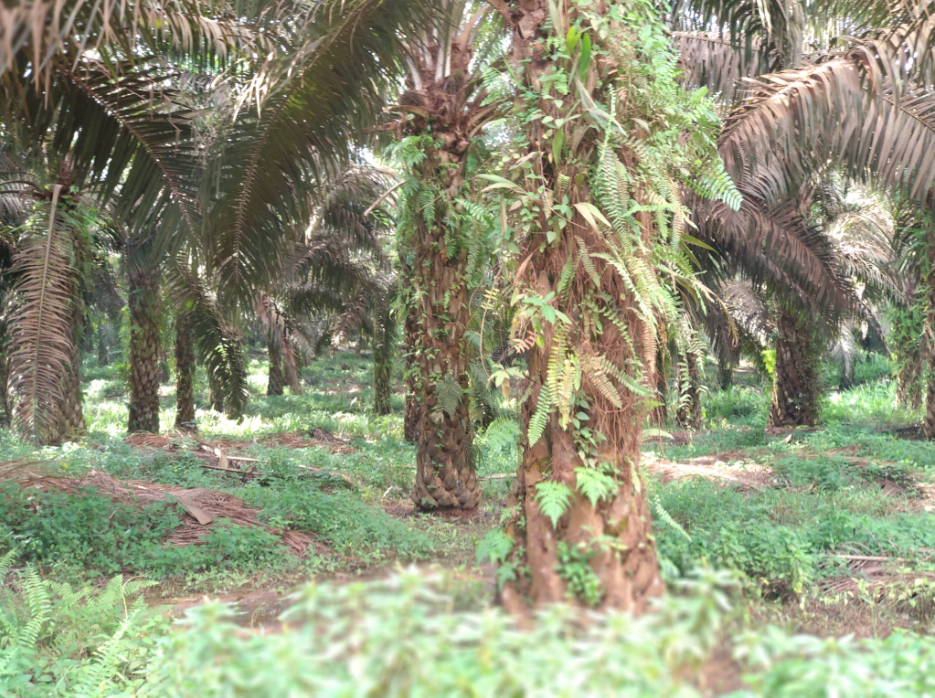
If productivity gains fail to keep pace with rising demand, mounting pressure on palm oil production could drive further expansion of plantation areas. Indonesia’s Ministry of Energy and Mineral Resources has itself projected that supporting the B50 programme may require an additional 2.3 million hectares of oil palm plantations. This raises important questions about future land availability and the ecological consequences of increasing pressure on land resources to supply biodiesel feedstock.
Indonesia’s oil palm plantations already cover approximately 20.9 million hectares, including plantations located within forest areas. Yet forests provide far more than land for economic development. They perform irreplaceable ecological functions by storing carbon, regulating the climate, sustaining biodiversity, and supporting the livelihoods of communities that depend on them, particularly Indigenous peoples. For many Indigenous communities, forests are not simply landscapes or natural resources, they are living spaces that sustain cultural identity. The Dayak Tomun community in Lamandau, Central Kalimantan, for example, continues to rely on forest resources to carry out the Bebantan Laman ritual. When forests are converted into monoculture plantations, what disappears is not only tree cover but also cultural practices and knowledge that have been passed down across generations.
Pressure on land also extends beyond questions of land availability. It has direct implications for climate change mitigation. The government estimates that the B50 program could reduce carbon emissions by as much as 44.46 million metric tons by replacing fossil diesel. Yet those projected benefits should be evaluated alongside the emissions generated throughout biodiesel’s production lifecycle, particularly if additional CPO is obtained through forest conversion or land-use change. While part of the increased feedstock demand can be met by existing oil palm plantations in Sumatra and Kalimantan, future production is also expected to rely on new expansion under the National Strategic Projects. These include the Food and Energy Estate in South Papua, a project covering approximately two million hectares that is expected to affect 49 Indigenous territories.
If rising demand for biodiesel ultimately drives further forest conversion, the emissions avoided by replacing fossil diesel could be offset by the carbon released through land-use change. In that scenario, Indonesia’s energy transition risks creating an ecological debt that will be inherited by future generations. This concern is all the more urgent as the world approaches critical climate thresholds beyond which environmental damage may become difficult or even impossible to reverse. The consequences are no longer confined to the future. The ecological disasters that struck Sumatra in 2025 demonstrated how extreme weather, environmental degradation, and land-use change can interact to amplify risks for communities.
For this reason, the success of the energy transition cannot be assessed solely by the volume of emissions reduced through replacing fossil fuels. It must also account for the full lifecycle impacts of biodiesel, including land-use change, ecological degradation, social consequences, and the burdens transferred to future generations. If sustainability is indeed one of the guiding principles of Indonesia’s energy transition, then the B50 policy should be evaluated not only for its contribution to reducing dependence on fossil fuels, but also for its broader ecological footprint.
As Article 33 of the 1945 Constitution makes clear, the land, waters, and natural resources of Indonesia are controlled by the state and must be managed for the greatest possible prosperity of the people. Yet prosperity cannot be understood solely in terms of economic growth or energy security. It also encompasses a healthy environment, a stable climate, and the ability of people to live in resilient ecosystems, both today and in the future. Viewed in this light, intergenerational justice is not an external principle imposed upon the Constitution, but it is inherent in the constitutional promise of prosperity itself.
The B50 mandate represents an ambitious effort to strengthen Indonesia’s energy independence. But an energy policy designed for the future should not create an ecological debt that limits the choices available to future generations. Rather, the energy transition should ensure that the benefits enjoyed today do not diminish the right of those who come after us to inherit a healthy environment and natural resources capable of sustaining life. For they are the ones who will live with the consequences of decisions they never had the opportunity to make.